A recent discovery in Pompeii has revealed new insight into why Roman concrete has lasted for centuries. In this article, we explore what the research means for modern concrete durability and how services such as non-destructive testing and concrete condition surveys help assess structural integrity today.
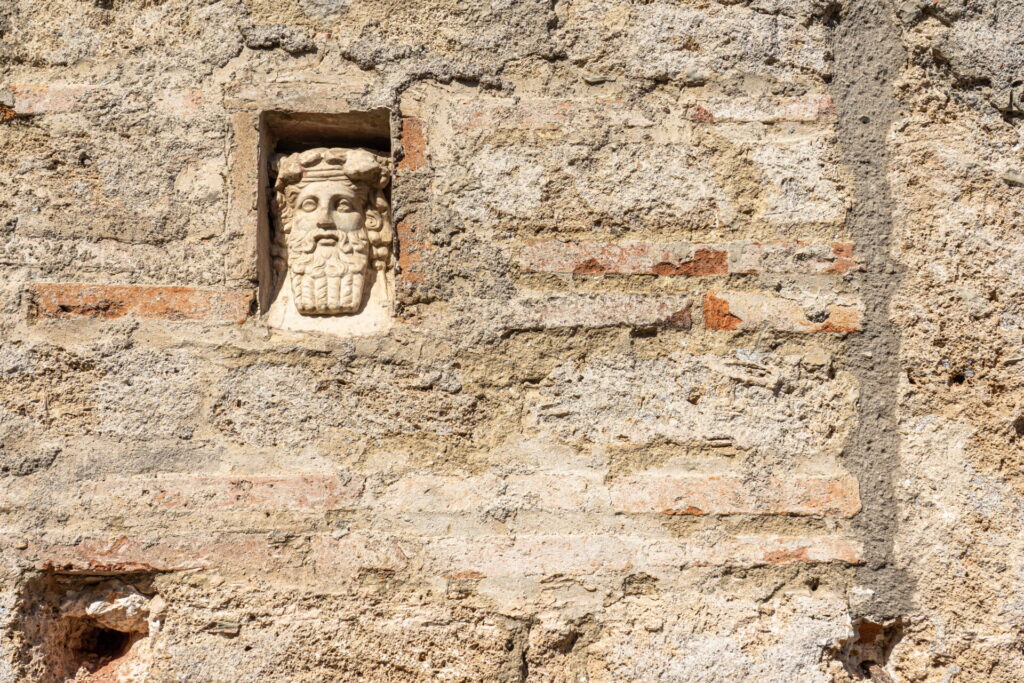
The uncovered construction site in Pompeii has provided researchers with something rare: a snapshot of Roman builders mid-project. Tools, raw materials and partially completed walls were preserved in volcanic ash when Mount Vesuvius erupted in 79 CE.
What makes this discovery significant is not just the history. It is what the material itself reveals. Scientists analysing the site have found new evidence about how Roman concrete was mixed and why it has endured for nearly two thousand years.
For those working in modern construction and infrastructure, the discovery reinforces something fundamental. Concrete performance is not just about design. It is about material behaviour over time. Understanding what is happening beneath the surface is critical.
That principle sits at the core of what CSI Scan does every day.
Researchers believe Roman builders used a method known as hot mixing, combining quicklime and volcanic ash before adding water. This created small lime fragments within the concrete matrix. When cracks formed over time, those fragments could react with moisture and help seal micro cracks naturally.
Whether intentional or not, the result was a material capable of long-term durability far beyond many modern concretes.
The key takeaway is not that we should build like the Romans. It is that material composition, mixing methods and internal structure directly affect long-term performance.
That remains true today.
In modern structures, concrete may appear sound externally while internal issues develop unnoticed. Reinforcement placement, voids, cracking, corrosion and bond performance all influence long-term integrity.
Unlike the preserved snapshot in Pompeii, we rarely get to see inside our structures so clearly.
This is where advanced investigation becomes essential.
CSI – Structural Investigations provides a range of services that allow engineers and asset owners to understand what is happening beneath the surface without damaging the structure.
Modern tools allow us to look inside concrete in ways that were impossible decades ago.
While Roman concrete may have had natural resilience built into its chemistry, modern structures rely on monitoring, inspection and testing to ensure longevity.
The Pompeii discovery reminds us that internal composition matters. Small material differences can significantly influence long-term durability.
CSI – Structural Investigation’s services such as:
all focus on answering one core question:
Is this structure performing as it should?
Integrity testing identifies hidden defects in piles and foundations. Pull off testing verifies bond strength. Anchor testing ensures installed systems meet design loads. Structural health monitoring tracks performance over time.
Rather than waiting for visible failure, investigation allows issues to be identified early.
That proactive approach is what separates long-lasting structures from those that require premature repair.
One of the most valuable aspects of the Pompeii construction site is that it captured the process, not just the outcome. It shows us how materials were prepared and applied.
In modern construction, quality assurance plays a similar role.
CSI – Structural Investigations Quality Assurance testing supports contractors and engineers by verifying that materials and installations meet required standards during construction, not after problems appear.
Durability begins at the start of a project. Accurate testing and verification help ensure that structures are built to perform for decades, particularly in environments like New Zealand where seismic activity, coastal exposure and heavy loading place additional demands on infrastructure.
Roman builders did not have access to ultrasonic testing, corrosion mapping or structural monitoring systems. They relied on experience and local materials.
Today’s structures are more complex, carry greater loads and operate under stricter safety standards. They require modern investigation techniques to ensure safety and performance.
The Pompeii discovery highlights how much internal material behaviour influences longevity. CSI – Structural Investigation’s services exist to provide clarity about that behaviour in today’s buildings, bridges, carparks and infrastructure.
Durability is not accidental. It is understood, tested and verified.
The preserved construction site in Pompeii offers fascinating insight into ancient engineering. It also reinforces a timeless principle: what happens inside a material determines how it performs over time.
For modern structures, we do not have volcanic ash to freeze a project in time and reveal its inner workings centuries later. Instead, we rely on expert investigation.
CSI – Structural Investigations helps engineers and asset owners see beyond the surface, providing the data needed to make informed decisions about safety, upgrades and long-term performance.
Concrete may have evolved, but the need to understand it has not.
We would be keen to hear what NDT solutions you would like for your structural resilience investigations.
If you would like to find out more about the Non-Destructive Testing Services (NDT) that we offer click here!
Click here for a list of our services.
Call Us On 0800 33 77 67 Or Request a Quote Here.