
Want to know what a concrete slab can really handle without damaging it? Our latest blog breaks down how engineers use non-destructive testing (NDT) to assess load capacity, from baseline surveys and material characterisation through to strain monitoring, controlled load testing, and the workarounds when only the top of the slab is accessible.
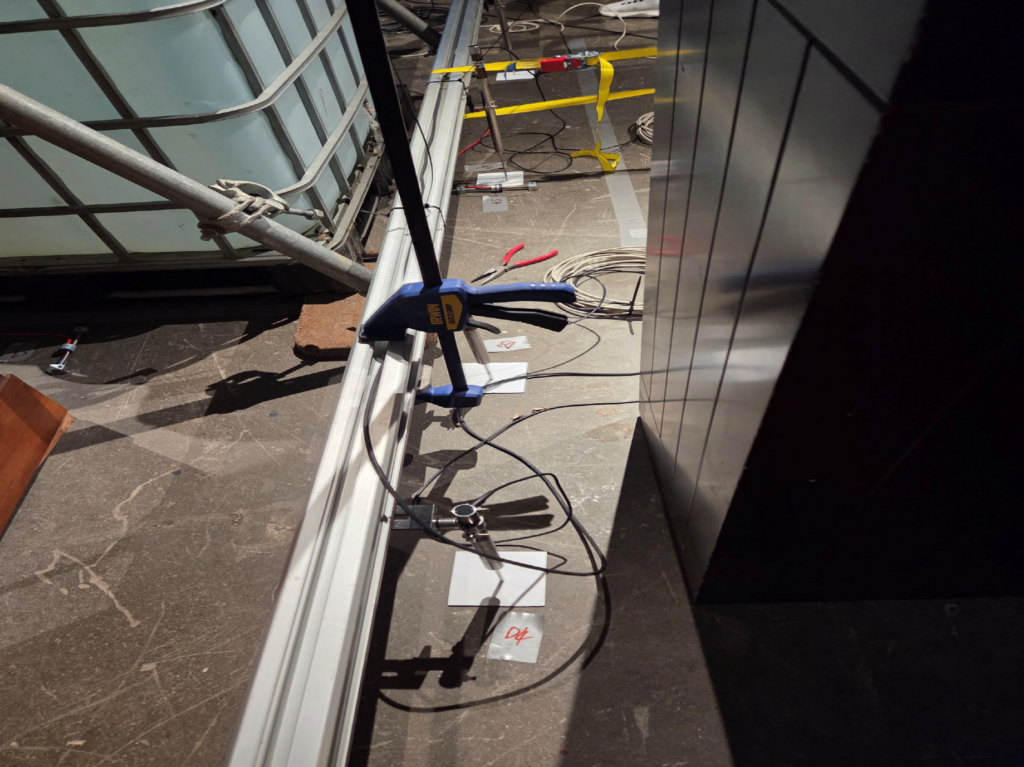
How load capacity of concrete slabs is typically assessed using non-destructive testing (NDT)
How NDT Is Generally Used to Assess Concrete Slab Load Capacity
The core idea is to evaluate how a slab behaves under controlled loading without damaging it. Engineers measure strain, deflection, cracking, and material properties to infer structural capacity.
Below is a procedural guide showing the standard workflow.
Standard Procedure for NDT-Based Load Capacity Assessment of Concrete Slabs
Establish Baseline Conditions
Document the slab’s existing condition before any loading.
Characterize Material Properties
Use NDT tools to estimate in-situ concrete strength and stiffness.
Install Strain and Deflection Instrumentation
Set up sensors to capture slab response during loading.
Apply Controlled Test Loading
Introduce load in increments while monitoring structural response.
Monitor Strain, Deflection, and Crack Development
Track how the slab behaves as load increases.
Evaluate Structural Performance
Determine whether the slab meets expected capacity and serviceability criteria.
How load capacity of concrete slabs is typically assessed using non-destructive testing (NDT) when the slab can only be accessed from the top:
Strain Measurement From Above
Deflection Measurement Without Underside Access
Laser displacement sensors mounted on independent tripods or frames that do not move with the slab
Crack Monitoring From Above Only
Ensuring Gauge Bodies Are Not Influenced by Slab Movement
Compensating for Missing Underside Data
Because the underside cannot be instrumented, engineers rely more heavily on:
Summary
Non-destructive load testing of concrete slabs typically relies on underside access for accurate strain, deflection, and crack monitoring. When underside access is impossible, the testing program must be redesigned around top-side instrumentation, indirect measurement techniques, and analytical modelling.
We would be keen to hear what NDT solutions you would like for your structural resilience investigations.
If you would like to find out more about the Non-Destructive Testing Services (NDT) that we offer click here!
Click here for a list of our services.
Call Us On 0800 33 77 67 Or Request a Quote Here.