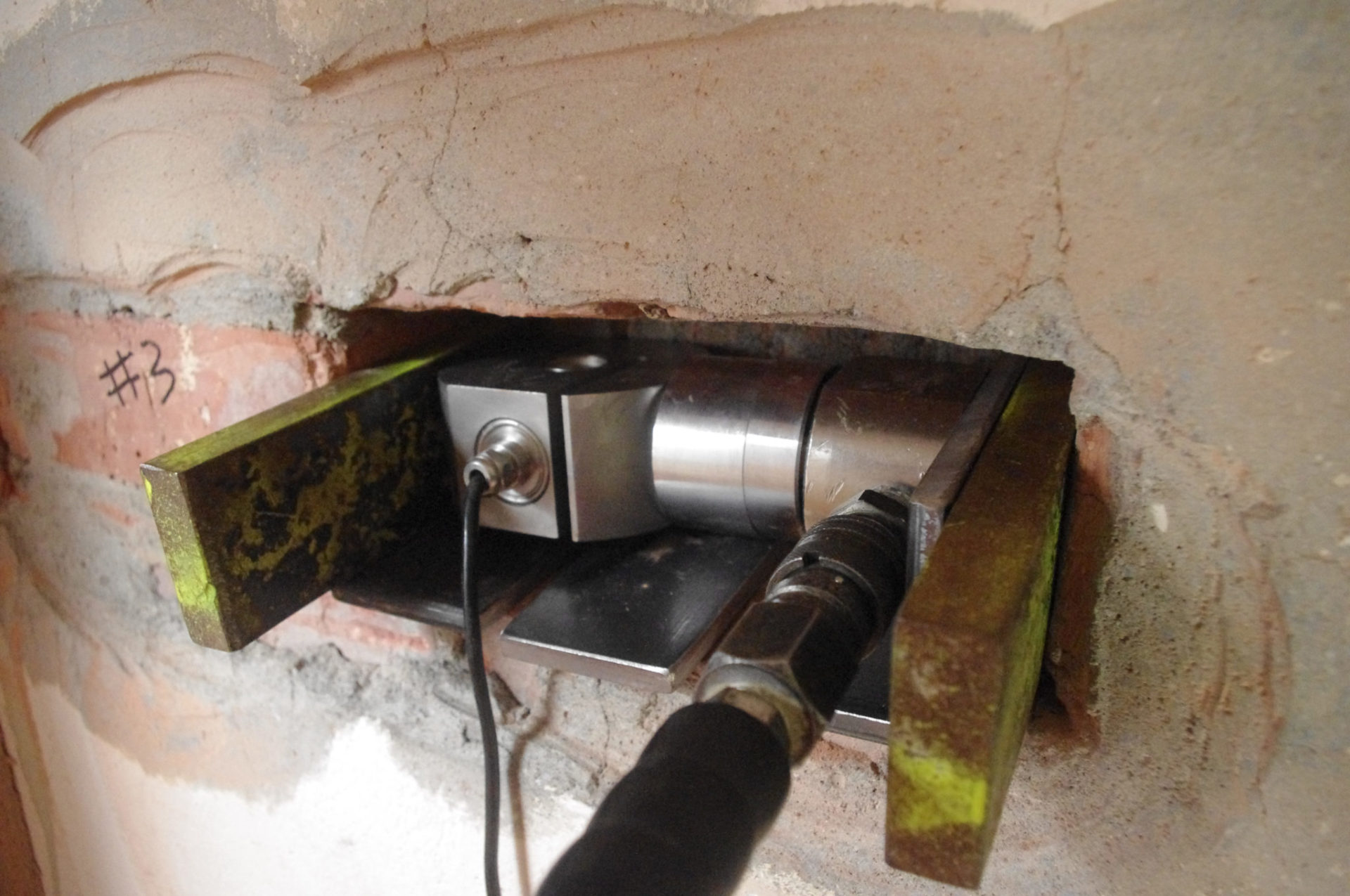
Unreinforced masonry (URM) testing consists of non-destructive and intrusive investigations on brickwork and stonework, which are common and often used in heritage building systems throughout New Zealand. Tests can be done on the individual masonry units, the bonding mortar, or the combination of these.
The non-destructive tests include:
The intrusive tests include:
URM testing will be very useful when structural engineering consultancies are required to perform retrofitting design on URM structures. URM structures have been shown to perform poorly during earthquakes and it is now mandatory to strengthen these structures in the most seismically active regions in New Zealand, such as Wellington and the Canterbury area. Our service can provide the information required by the design engineers to perform their calculations for the retrofitting purpose.
Just like any other construction materials, it is important to know the actual properties of the masonry units constituting the concerned structures before any reliable retrofitting design can be performed. However, masonry structures, especially those composed of clay bricks or stones, are so inhomogeneous that their strength properties highly depend on a range of factors, primarily workmanship. It is not advisable to perform the retrofitting design using the value of these strength parameters obtained from literature. Through our service, the representative value of these parameters can be provided. Beside the information obtained through scanning, the following strength parameters required for retrofitting design can be obtained through the services above
When the representative values of these parameters are known, design engineers can perform their retrofitting design with higher confidence.
November 3rd, 2022
Read along to find out more about the latest Anchor Testing Project that we completed for our special clients; Hospitality […]
May 26th, 2022
Over the Easter break, the Directors at CSI have been working hard in the Britomart Tunnels to provide effective service […]
March 2nd, 2022
PROJECT REQUIREMENTS To help construct an extra ICU space in a hospital, sinks had to be added. This required coring […]

Kurtis and his team showed highly skilled reading of scan results. These allowed them to be the only ones who successfully located the defects (random voids) in Polystyrene blocks filled with concrete and lined with Gib in a prepared area...
Maynard Marks

Engaging CSI to conduct the Pile Integrity Testing on the large 1.8m diameter piles was a wise choice. Their technicians were knowledgeable, approachable, punctual, health and safety conscious and flexible when we encountered late changes to the works programme. Results...
Fulton Hogan

As requested, the workers from CSI ltd contacted this office on arrival at the site and invited me (Kevin J Heays) to site visit and get an understanding of the intended works. I was impressed with the workers knowledge of...
Kevin Heays (ECANZ)

The CSI team were great and they did a good job for us. They were employed to complete QA on a Wellington Apartment Development using Pile Integrity Testing. We would recommend CSI to others in the future.
Richardson Drilling

CSI did a good job for us at an Auckland Apartment building; saving our team from drilling through services which would have caused considerable delays. We would recommend CSI to others for scanning
Allendale Electrical

CSI provided a great service. We could not advise them on areas of improvement as their service was highly professional.
Wilson Building

We found CSI via their website and were grateful that we had. Their service was highly professional.
Artisan Developments Ltd

CSI have completed several jobs for us. They are highly skilled operators.
Tracer Construction

CSI was recommended by a health board, and they did a great job for Q Interiors. We are already looking at employing them for future work.
Q Interiors

The service and follow-up of CSI Ltd was excellent. We would definitely use them again.
Grayburn Property Service

CSI Ltd did a great job for us. When we were asked what improvements could be made, we could think of no gaps in their professional service.
Trademark Building Services

CSI Ltd were recommended to us and did a great job. We would be happy to recommend them to others.
Stanley Construction

We were recommended CSI by an Engineer and he was absolutely correct; their GM particularly communicated well and was highly professional.
MSC Consulting Group

CSI has completed some exciting projects with Novare Design “I am very impressed at the responsiveness, relevance and accuracy of the testing and data supplied to Novare for some recent strengthening projects. We have worked with CSI on several projects...
Novare Design

Darren, Ali and the team at CSI have been a great help at the Oaks Shores refurbishment project. CSI was willing to work through the difficulties of travel under various Covid-19 levels, ensuring they could be of assistance in Queenstown...
Brosnan Construction